
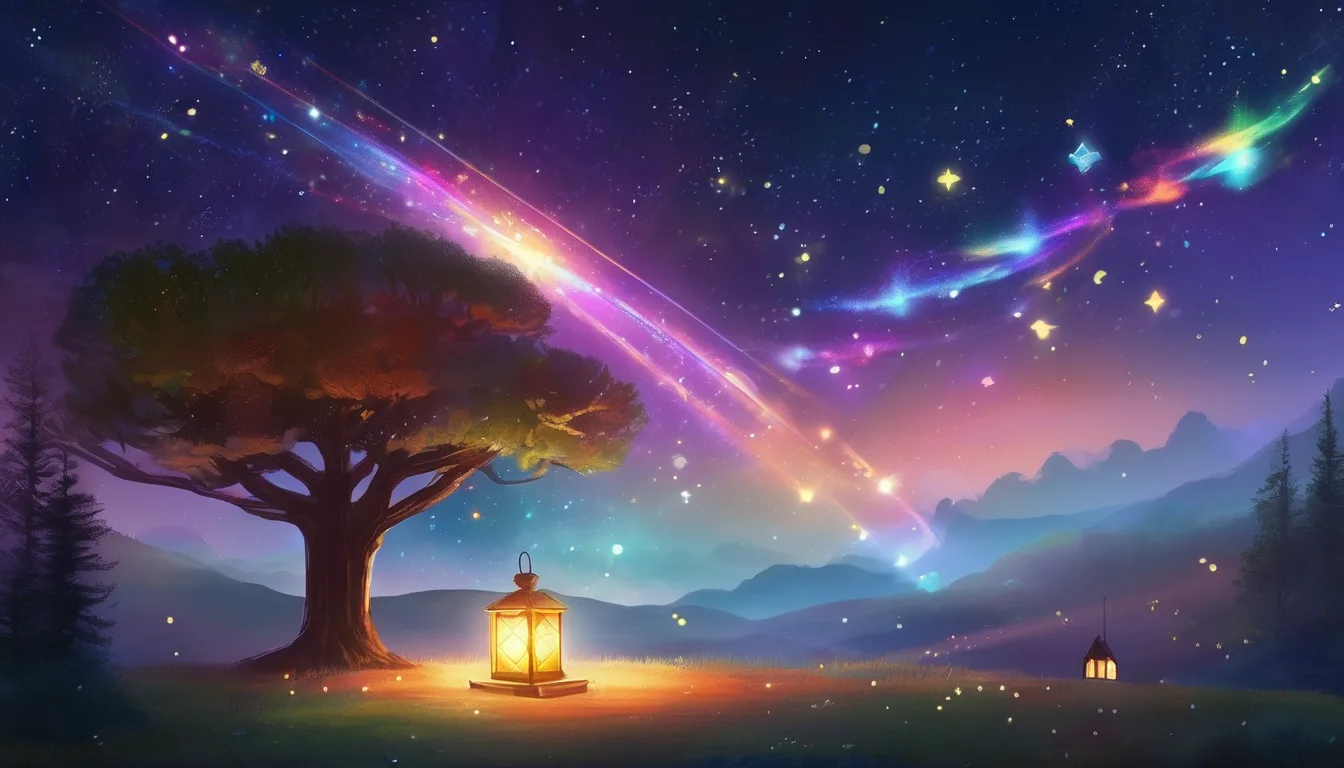
Far beyond the moon, where the sky was as deep as an ocean and stars glittered like tiny lanterns, there floated a small spacecraft named Niko.
Niko was not very big. He was about the size of a garden shed, with round windows, silver wings, and a cheerful blue light that blinked whenever he felt excited.
Blink-blink!
Niko had one job. He carried little boxes of weather notes from one space station to another. He knew about rain clouds over oceans, sunny days over deserts, and snowstorms that curled around the tops of mountains.
Most of the time, Niko traveled alone.
He did not mind the quiet. Space had lovely sounds if you knew how to listen. There was the soft hum of his engine, the tiny tick of his clock, and sometimes the faraway crackle of starlight brushing across his antenna.
But Niko did wonder what it might be like to travel with friends.
One evening, while he was floating past a misty purple cloud of space dust, his receiver gave a little chirp.
“Help,” came a voice.
Then another voice said, “We are over here.”
Then a third voice added, “We think.”
Niko’s blue light blinked quickly.
“Hello?” he called through his radio. “Who needs help?”
A cluster of tiny lights winked in the darkness ahead. Niko turned his silver wings and sailed toward them.
When he arrived, he found a most unusual sight.
There were seven old satellites drifting together in a loose, wobbly line.
They were all different shapes and sizes. One was round and gold, with a cracked solar panel. One was long and thin, with a crooked antenna. One looked like a little metal flower, with six folding petals. Another was square and covered in faded red paint.
They were not broken exactly.
They were simply lost.
The round gold satellite spoke first.
“My name is Amina,” she said. “I used to watch the oceans. I could tell sailors when great storms were coming.”
The long thin satellite gave a shy crackle.
“I am Tomas,” he said. “I used to carry messages from faraway places.”
The metal flower opened one of her petals.
“My name is Sora. I studied the colors of forests.”
The square red satellite made a grumpy beep.
“Bartos,” he said. “I counted passing comets. Very important work. Very bright comets.”
One by one, the others introduced themselves. There was Mei, who had once measured moon dust. There was Oskar, who listened for whale songs from Earth. There was Zuri, the smallest satellite of all, who had taken pictures of lightning.
Niko floated beside them, listening carefully.
“How did you get lost?” he asked.
Amina’s golden surface dimmed.
“Years ago, a great solar wind swept through this part of space. It pushed us far from our paths. Our maps no longer matched the sky.”
“We tried to find our way back,” said Tomas. “But every star looks like a tiny pinprick when you do not know which way to go.”
“We joined together,” said Mei, “because being lost is less frightening when someone is nearby.”
Bartos gave a small huff.
“We are a convoy,” he said. “A convoy of lost satellites.”
Niko looked at the seven satellites. They drifted close together, but not quite close enough to feel safe. Between them stretched dark, quiet spaces.
“I can help,” said Niko.
“Can you?” asked Zuri.
Niko’s blue light glowed warmly.
“I have weather maps, star maps, travel maps, and three different kinds of emergency biscuit crumbs in my storage drawer. I may be small, but I am good at finding things.”
The satellites made hopeful little beeps.
So Niko joined the convoy.
He flew at the front, shining his blue light. Amina floated behind him, then Tomas, then Sora, Mei, Oskar, Bartos, and tiny Zuri at the very end.
Together, they sailed through the violet dust cloud.
At first, the journey was easy.
They passed a slow-turning moonlet with a bright ring around its middle. They glided over a field of old ice crystals that flashed green and pink. They saw a comet sleeping in the distance, its tail tucked around itself like a silver blanket.
Then Niko’s map began to flicker.
“Oh,” he said.
“What is it?” asked Amina.
“There is a shortcut through the Whispering Belt,” said Niko. “It will take us toward the Great Star Road.”
“The Whispering Belt?” squeaked Zuri. “Why is it called that?”
Niko checked his map.
“It is a region full of spinning pebbles, dusty rocks, and tiny frozen bits. When the sunlight touches them, they send strange signals through radios.”
Bartos brightened.
“Sounds scientific.”
“It also says,” Niko continued, “that travelers should stay close together.”
The convoy moved into the Whispering Belt.
All around them, little rocks spun and tumbled. Some were as small as buttons. Some were as large as houses. They glimmered in the dark, and their shadows slid across one another.
Then the whispers began.
“Turn left,” murmured a voice through Niko’s radio.
“Turn right,” said another.
“Go faster.”
“Go slower.”
“Your antenna is crooked,” whispered a particularly rude voice.
Tomas’s antenna drooped even more.
“It is crooked,” he said sadly.
“It is perfectly useful,” Niko told him. “And we need it.”
The whispering grew louder. It came from every direction.
“Follow the red star.”
“Follow the blue star.”
“Follow the star shaped like a spoon.”
The satellites began to wobble.
“I cannot tell which voice is real,” said Sora.
“Neither can I,” admitted Niko.
Amina looked ahead. “Then perhaps we do not need to listen to the voices.”
“What should we listen to?” asked Zuri.
Amina’s golden dish turned toward Earth, which was very far away now, shining blue and white like a marble in the darkness.
“We should listen to one another.”
Niko thought this was an excellent idea.
“Tomas,” he said, “can you send a strong clear signal?”
Tomas straightened as much as he could.
“I can try.”
He sent out a steady pulse.
Beep. Beep. Beep.
“Mei,” said Niko, “can you check which direction the moon dust would drift?”
Mei watched tiny specks floating past her sensors.
“The dust is moving eastward,” she said. “A solar breeze is coming from behind us.”
“Sora, can you see whether there are shadows ahead?”
Sora opened all six petals.
“Yes,” she said. “There is a clear path between those two large rocks.”
“Oskar,” said Niko, “listen for anything large moving nearby.”
Oskar became very still.
For a moment, there was only the hum of engines.
Then Oskar said, “A spinning boulder is coming from below. It will pass in ten minutes.”
“Bartos,” said Niko, “watch the bright things.”
Bartos gave a delighted beep.
“I see a comet chip. It is bouncing along the path. If we follow it, we will avoid the boulder.”
“And Zuri,” Niko said, “can you light the way at the back?”
Tiny Zuri blinked with pride.
“My lightning camera has a flash setting!”
Flash!
A bright silver sparkle lit up the convoy.
With everyone helping, they passed safely through the Whispering Belt.
The false voices faded behind them.
“We did it!” cried Zuri.
“We did,” said Niko. “Every one of us.”
Beyond the belt, they found the Great Star Road.
It was not a road made of stone or metal. It was a glowing ribbon of bright stars, stretching across space in a long, gentle curve. Ships, probes, and distant travelers often used it to find their way.
But when Niko checked his maps, his blue light dimmed.
“Oh dear.”
“What now?” asked Bartos.
“The Great Star Road can take us home,” Niko said, “but there is a problem.”
“What problem?” asked Sora.
Niko pointed toward a wide black stretch between the stars.
“The road is broken here.”
The satellites stared.
“How can a road made of stars be broken?” asked Zuri.
“Not the stars themselves,” Niko explained. “The pattern is broken. There is a dark gap where several guiding stars are hidden behind a cloud of cold space mist. Travelers cannot see where to go.”
Amina was quiet for a long moment.
“Then we cannot return to our old paths,” she said.
Tomas’s signal made a soft, sad buzz.
“We have been lost for so long.”
Niko looked at his friends. He thought of the way they had traveled together. Amina’s wisdom. Tomas’s steady signal. Sora’s sharp eyes. Mei’s careful measurements. Oskar’s listening. Bartos’s comet counting. Zuri’s brave bright flashes.
Then Niko had an idea so surprising that his blue light blinked wildly.
“Maybe you do not have to return to your old paths,” he said.
Bartos turned his red face toward him. “What else is there?”
Niko floated into the dark gap and looked back at the convoy.
“You are all lights,” he said. “You all have signals. You all know how to shine, listen, watch, measure, and guide.”
Zuri gasped.
“You mean…”
“Yes,” said Niko. “What if we make a new constellation?”
The satellites were silent.
A constellation was a picture made from lights in the sky. Some looked like bears, boats, crowns, hunters, or dancing birds. Travelers on Earth looked up at constellations to find directions, tell stories, and remember that the night was full of wonders.
“But we are satellites,” said Mei. “Not stars.”
“Maybe not,” said Niko. “But you can still make a pattern. A useful pattern. A beautiful one.”
Amina’s golden dish began to glow.
“What shape should we make?”
They considered many ideas.
Bartos wanted a comet with a grand tail.
Sora suggested a flower.
Oskar wanted a whale.
Zuri liked the idea of a lightning bolt.
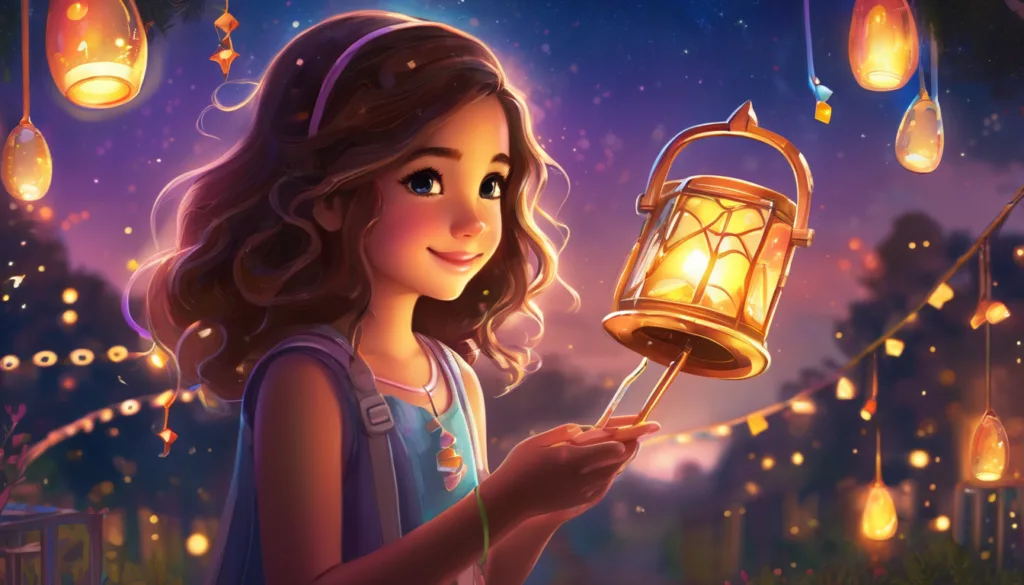
At last, Tomas said quietly, “What about a lantern?”
Everyone looked at him.
“A lantern?” asked Niko.
Tomas gave a small beep.
“When someone is lost, a lantern helps them see the way.”
It was the perfect idea.
So the convoy began its greatest adventure of all.
Niko used his small thrusters to guide each satellite into place. Amina became the round glowing center of the lantern. Tomas stretched above her as the handle. Sora and Mei formed shining sides. Oskar and Bartos became the sturdy base. Tiny Zuri floated at the very bottom, flashing like a little flame.
And Niko?
Niko settled just beside the lantern, not part of the shape, but close enough to keep watch.
“Ready?” he asked.
“Ready,” said Amina.
“Ready,” said Tomas.
“Very ready,” said Bartos.
One by one, the satellites turned on their lights.
Amina shone warm gold.
Tomas sent out a clear, steady signal.
Sora glowed green.
Mei shimmered pale silver.
Oskar gave off a soft blue gleam.
Bartos flashed comet-red.
Zuri sparkled bright white.
Together, they formed a lantern in the sky.
The cold space mist around them began to glitter. Travelers far away saw the new pattern and adjusted their paths. A little research ship, lost near the edge of the mist, followed Tomas’s signal safely home. A moon rover used Zuri’s flashes to guide its way. Even a sleepy comet turned slightly, as if it wanted to admire the view.
Soon, people on Earth noticed it too.
Children peered through telescopes from rooftops and gardens. Sailors saw it above the ocean. Campers pointed from beneath pine trees.
“There,” they said. “Do you see it? The Lantern Constellation.”
And whenever someone felt uncertain in the dark, they could look up and remember that even a lost traveler could become a light for someone else.
Niko stayed with his friends for a while.
Every evening, he delivered weather notes along the Great Star Road. Every night, he passed the shining lantern and heard the gentle beeps of the satellite convoy.
“How are you?” Niko would ask.
“Guiding,” said Amina.
“Glowing,” said Sora.
“Listening,” said Oskar.
“Counting comets,” said Bartos.
“Flashing!” cried Zuri.
And Tomas would send his calm signal.
Beep. Beep. Beep.
It meant, “You are not alone.”
At last, after many journeys, Niko flew back toward his own small route among the stars. He still traveled by himself sometimes, carrying weather notes through the quiet darkness.
But he no longer felt quite so alone.
Whenever space seemed large and mysterious, he looked up at the Lantern Constellation.
There it was, shining softly in the dark.
A golden center.
A silver handle.
A bright little flame.
A group of once-lost satellites, glowing together.
Niko’s blue light blinked once, twice, and then slowly settled into a peaceful glow.
Far below, Earth turned gently beneath its blanket of clouds.
Far above, the stars twinkled.
And in the middle of the wide, dark sky, the Lantern Constellation shone all night long, helping every traveler find a way toward home.
Leave a Reply