
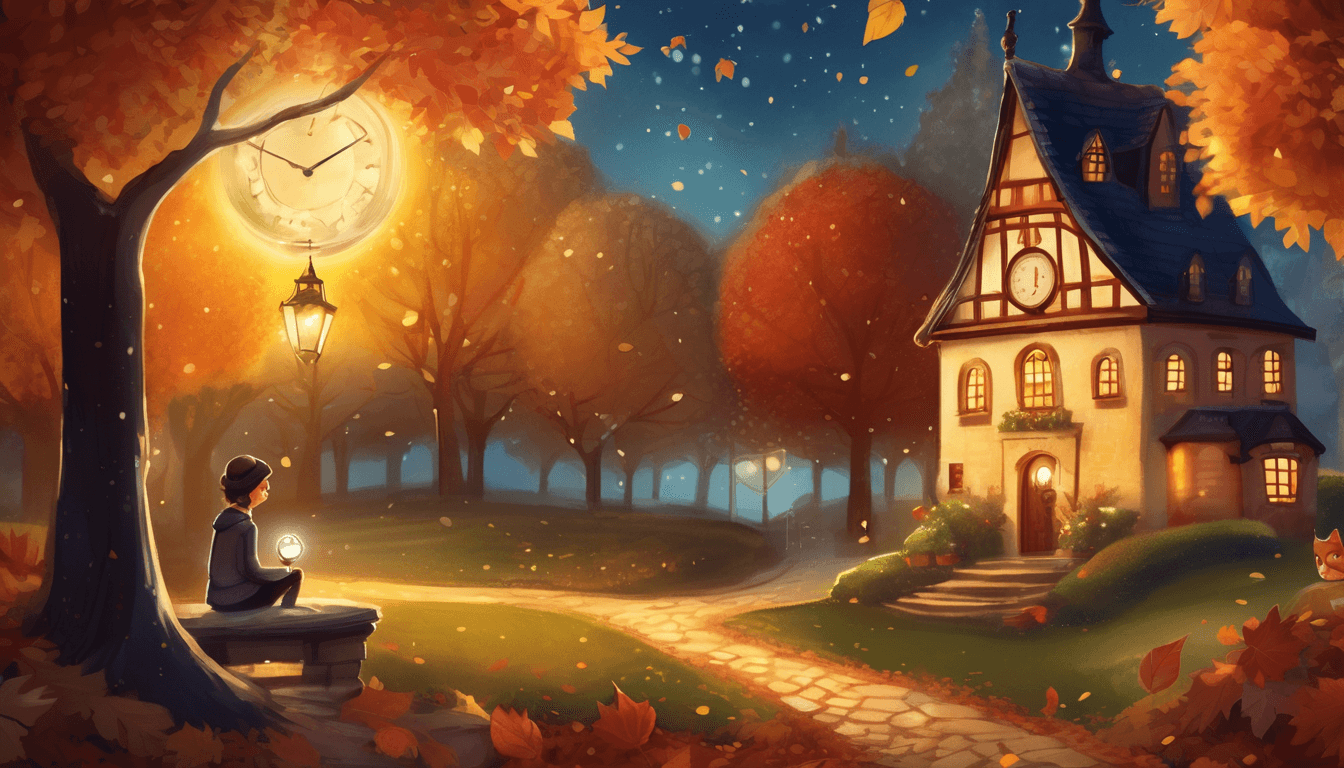
On the third floor of a narrow yellow house in the city of Bellamare, there was a wardrobe with a squeaky blue door.
Inside the wardrobe lived three shirts, a winter scarf, one shiny boot, one very muddy boot, a hat with a feather in it, and a pair of trousers named Soren.
Soren was not an ordinary pair of trousers.
For one thing, Soren had pockets so deep that small treasures sometimes vanished inside them for weeks. A cherry stone. A button shaped like a moon. A crumpled drawing of a dragon wearing spectacles. Once, a whole cinnamon biscuit was found at the very bottom, though nobody knew how it had gotten there.
For another thing, Soren had opinions.
Very strong opinions.
“I do not mind puddles,” Soren often said, though trousers usually did not speak aloud unless the moon was full or the laundry basket was feeling especially thoughtful. “Mud washes out. Grass stains are a sign of good work. But I will not be worn just anywhere, by anyone, for any old reason.”
Soren belonged to a child named Miro, who was seven and a half, which Miro felt was much more important than being seven.
Miro loved maps, toast with honey, and the tiny brass telescope that had belonged to Grandmother Anouk. He also loved journeys, especially if they involved a bag packed with snacks.
One bright morning, when the clouds looked like bits of sheep’s wool caught on the hills, Miro hurried into the bedroom.
“Today’s the day!” he said.
He opened the wardrobe.
The shirts rustled. The scarf gave a little yawn. The muddy boot rolled over and bumped the shiny boot.
Miro reached for Soren.
But Soren slipped off the hanger, folded himself neatly in half, and landed on the wardrobe floor.
Miro blinked.
“Soren?”
“No,” said Soren.
“No what?”
“No, you may not wear me.”
Miro stared down at the folded trousers.
“But I need trousers.”
“That is often true,” said Soren. “Still, I need to know where we are going.”
“We are going out.”
“That is not a place.”
“To the train station.”
“That is not enough.”
Miro put his hands on his hips. “We are catching the nine o’clock train.”
“And after that?”
Miro frowned. “Why do you need to know?”
Soren’s buttons glinted in the morning light.
“Because journeys are important things. They take feet away from home and bring hearts toward something new. I will not bend my knees, swish through train doors, or carry biscuits in my pockets unless you explain where you are going and why the journey matters.”
Miro huffed.
“Fine. We are going to the village of Brindlewick.”
“And why?”
“To see Auntie Sabine.”
“Why?”
“Because she lives there.”
Soren did not move.
Miro tried again.
“Because she invited us.”
Soren remained folded.
At last Miro sat down on the rug, which had little orange flowers woven into it.
Auntie Sabine lived in Brindlewick, a village tucked between green hills and a river that curled like a silver ribbon. She ran a small bakery with a red door and a bell that went ting-ting whenever someone entered.
Miro had visited Auntie Sabine many times. They had made plum jam together. They had built a birdhouse that leaned a little to the left. They had watched rain dance on the bakery windows.
But this journey was different.
Miro looked at the tiny brass telescope on his desk.
Then he looked at Soren.
“Auntie Sabine sent a letter,” he said quietly.
“What did it say?” asked Soren.
Miro took the letter from beneath the telescope. It was pale green, with a smudge of flour in one corner.
He read aloud.
“Dear Miro, the old moon clock in Brindlewick Square has stopped. You remember it, don’t you? It is the tall clock with the golden moon face and the tiny silver stars around it. Every evening, when it chimes, all the bakers know it is time to begin the night bread.
“But now it has gone silent.
“Your grandfather used to wind it with a special key, but the key is missing. I think it may be somewhere in the old garden behind the station, where he once kept his tool shed.
“If you can come, bring your sharp eyes, your brave hands, and perhaps some jam sandwiches.
“With love and a floury hug,
Auntie Sabine.”
Soren’s seams gave a thoughtful twitch.
“So,” said the trousers, “you are going to find a key?”
“Yes.”
“And repair the moon clock?”
“If we can.”
“Why does that matter?”
Miro opened his mouth quickly, but then stopped.
Outside, a pigeon landed on the windowsill. It puffed out its chest and looked very busy, though it seemed to have nowhere to be.
Why did it matter?
“It matters because Auntie Sabine needs help,” Miro said slowly. “And because all the bakers are worried. If the clock does not chime, they won’t know when to start baking the bread. The village might wake up tomorrow with no warm loaves at all.”
Soren was quiet.
“And,” Miro added, “Grandfather told me that the moon clock has been there for a hundred years. Maybe more. He said that when the clock chimes, it sounds like the village saying goodnight to itself.”
The wardrobe became still.
Even the feather in the hat stopped trembling.
At last Soren unfolded one leg, then the other.
“That,” said Soren, “is a reason worth travelling for.”
Miro grinned.
“But,” said Soren, lifting one trouser leg, “you must promise not to sit in anything that smells mysterious.”
“I promise.”
“And you must pack jam sandwiches.”
“I already did.”
“Excellent. I am ready.”
Miro put on Soren, and the trousers fit perfectly, as if they had been waiting all morning for that exact answer.
At the train station, the nine o’clock train puffed steam into the air. It was painted green with brass handles and windows so clear that Miro could see a lady inside knitting something yellow.
Miro and his mother climbed aboard. They found seats beside the window.
As Bellamare slid away behind them, Soren whispered, “Do you see? Already we are journeying properly.”
Miro pressed his nose to the glass.
They passed fields dotted with sheep. They passed a pond where ducks made wobbly V-shapes in the water. They passed a forest full of birch trees with white trunks, each one standing like a quiet candle.
Then the train slowed.
And slowed.
And stopped.
A conductor in a purple cap walked down the aisle.
“Small delay,” he announced. “A herd of goats has decided the tracks are a very fine place for a meeting.”
Miro sighed.
“We will be late.”
“Perhaps,” said Soren. “But a journey is not only made from arriving.”
The goats outside were indeed having a meeting. They stood in a fluffy crowd across the rails, chewing grass and blinking at the train. One goat wore a red ribbon around its neck. Another had somehow gotten a newspaper stuck on one horn.
The passengers laughed. The conductor clapped his hands. A farmer shook a bucket of apple slices.
Eventually, one goat moved.
Then another.
Then all of them wandered away, except for the one with the newspaper, who gave a grand little bow before trotting after the others.
The train went on.
At Brindlewick Station, Auntie Sabine was waiting under a sign covered in climbing roses. Her flour-dusted apron was tied over a blue dress, and her curls had escaped from her bun in every direction.
“Miro!” she cried, wrapping him in a warm hug. “And Soren too, I see.”
Soren gave a proud wrinkle.
They hurried through the village. The moon clock stood in the square, taller than three grown-ups standing on one another’s shoulders. Its round face was pale gold. Little silver stars circled the edge.
But its hands were frozen at seven minutes past six.
No chime came from inside.
Behind the station, Auntie Sabine led them to the old garden. It had once been Grandfather’s, but now it was wild with foxgloves, tall grass, and raspberry canes. A crooked shed leaned beneath an apple tree.
“The key could be anywhere,” said Auntie Sabine.
Miro swallowed.
The garden suddenly seemed enormous.
They searched beneath flowerpots. They searched behind stones. Miro found a snail shell striped like a peppermint sweet. He found a rusted spoon. He found a marble that shone blue as a raindrop.
But no key.
The sky began to turn peach and lavender.
Soon it would be evening.
Soon the moon clock should chime.
Miro’s shoulders sank.
“What if we cannot find it?”
Soren’s pockets gave a gentle rustle.
“Sometimes,” said Soren, “when you are looking very hard at the ground, you forget to look at what the ground is trying to tell you.”
Miro looked down.
There, in the soft soil, was a narrow line of tiny holes.
Ant holes.
The line led from a cracked flowerpot toward the old shed.
Near the shed, Miro saw something glimmering under a nest of dry leaves.
He knelt down.
Carefully, he brushed the leaves aside.
There was the key.
It was long and dark with age, with a little moon carved into its handle.
Auntie Sabine clapped both hands over her mouth.
“You found it!”
They raced to the square.
Inside the clock tower, the stairs curled upward and upward. Miro climbed, holding the rail. Soren stretched and bent with every step, pleased to be doing important climbing.
At the very top was the clock’s great heart: wheels, chains, bells, and brass cogs, all waiting silently.
Auntie Sabine showed Miro the keyhole.
His hand trembled just a little as he placed the key inside.
“Turn,” she whispered.
Miro turned it once.
Nothing happened.
He turned it twice.
A low hum stirred through the tower.
He turned it three times.
Then the gears began to move.
Tick.
Tick.
Tick.
The clock hands shivered.
They crept forward.
Below, the people of Brindlewick gathered in the square. Bakers in white aprons, shopkeepers, children, gardeners, and even the station conductor in his purple cap.
The golden moon on the clock face rose into place.
Then the bell rang.
Bong.
It was a warm sound. A round sound. A sound like bread coming out of an oven, like doors closing softly, like somebody pulling a blanket up beneath a sleepy chin.
Bong.
Bong.
The village listened.
Then everyone cheered.
That night, Auntie Sabine baked the first loaves of night bread. Miro helped brush them with butter. Soren held a small bag of flour in one deep pocket and did not complain even when a little dust settled on his knees.
Later, Miro stood outside the bakery with Auntie Sabine.
The moon clock shone above the square.
“It really does sound like the village saying goodnight,” Miro said.
“Yes,” said Auntie Sabine. “And tonight, it has you to thank.”
When Miro finally climbed into bed at Auntie Sabine’s house, Soren rested over the back of a chair.
“You were right,” Miro whispered sleepily. “It was important to know why we were going.”
Soren’s legs gave the tiniest, happiest sway.
“A journey matters,” said Soren, “when it carries kindness somewhere it is needed.”
Outside, Brindlewick’s moon clock ticked steadily through the dark.
Tick.
Tick.
Tick.
And with the soft smell of warm bread drifting through the window, Miro dreamed of silver stars, goat meetings, secret keys, and all the wonderful places a pair of very particular trousers might agree to go next.
Leave a Reply