
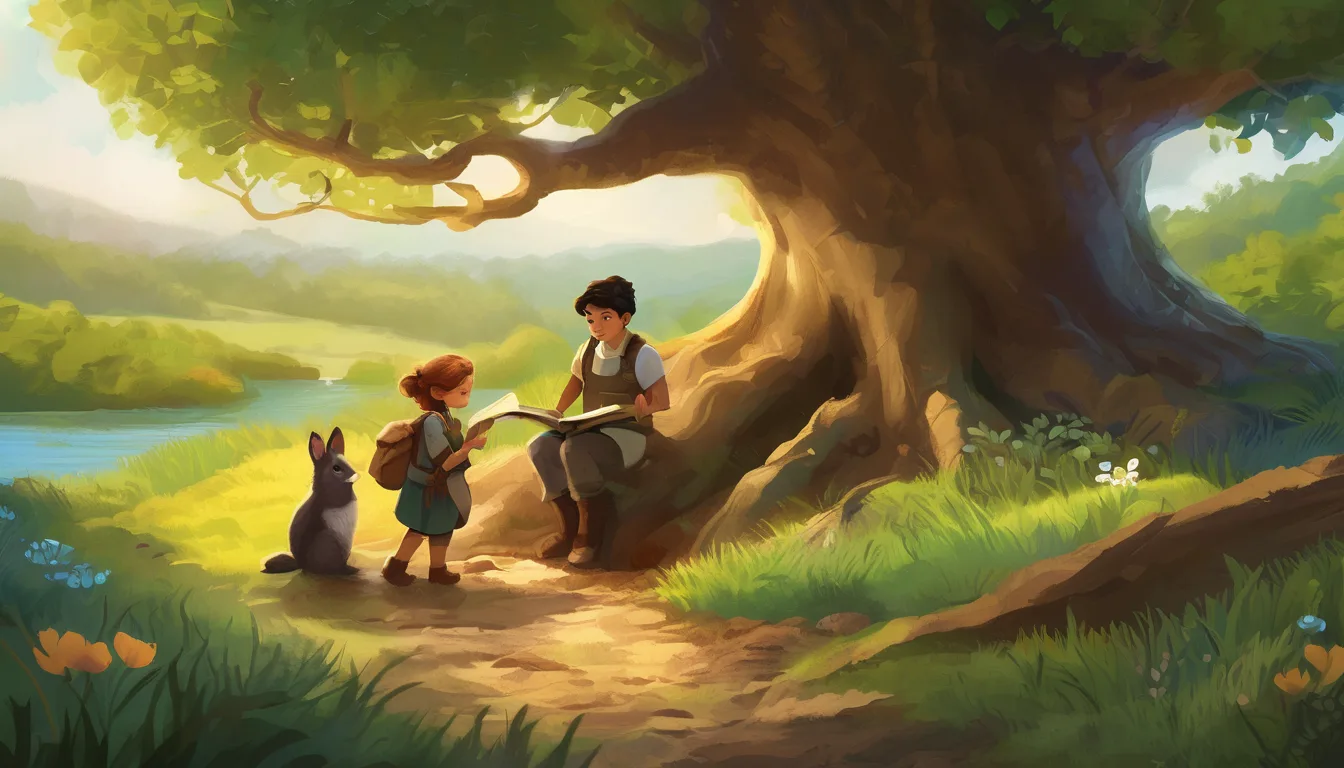
In a small town beside a wide, whispering river lived a child named Sami.
Sami’s house had a blue front door, three flower pots on the windowsill, and a little attic room with a round window that looked out over the rooftops. From that window, Sami could see the faraway hills, soft and purple in the evening light.
Everyone in town knew that beyond those hills stood a house unlike any other.
It was tall and narrow, with weathered green shutters and a garden full of odd things. There were stone statues of turtles wearing hats, a crooked sundial, a pond shaped like a teardrop, and a great iron gate covered in climbing roses.
That house belonged to Professor Anwar Bellini, the most famous explorer anyone had ever heard of.
Professor Bellini had crossed deserts where the sand sang under the moon. He had sailed through foggy seas where glowing fish lit the waves beneath his boat. He had climbed mountains so high that the clouds rested on his shoulders. He had once spent an entire winter in a cave with a family of gentle snow leopards.
But now Professor Bellini was retired.
He no longer wore his muddy boots every day. He did not sleep in tents or eat soup from tin cups or chart islands that had never appeared on maps.
Instead, he wore warm cardigans with too many pockets. He made cinnamon tea. He polished his compass collection. And every afternoon, he sat beneath the pear tree in his garden and watched the sparrows argue over breadcrumbs.
Then, one rainy Thursday, a golden envelope arrived at Sami’s blue front door.
It had no stamp.
On the front, in curly black ink, it said:
For Sami, Who Notices Things.
Inside was a note.
Dear Sami,
I have one final expedition left in me.
It is more important than any expedition I have ever made.
In my keeping is a very old seed. It must be planted in the safest place in the world.
I need a clever companion, with sharp eyes, kind hands, and a brave heart.
Please come to my house at sunrise.
Bring a raincoat, a snack, and one good question.
Professor Anwar Bellini
Sami read the letter three times.
Then Sami packed a yellow raincoat, two oat biscuits, a small apple, a water bottle, a woolen scarf, and a notebook with a pencil tucked into the spine.
For the good question, Sami thought very hard.
At sunrise, the rain had stopped. The world glittered with drops of water. Sami hurried over the hill to Professor Bellini’s iron gate.
The gate was already open.
Professor Bellini stood in the garden wearing a deep red cardigan, sturdy brown boots, and a hat with a feather tucked into its band. His beard was silver and curly, and his eyes were bright behind round spectacles.
“You came,” he said.
“Of course,” said Sami. “What kind of seed is it?”
Professor Bellini smiled. “Ah. You brought your good question.”
He led Sami into the house.
It was full of wonders.
Maps covered the walls. Some were rolled up in baskets. Some were framed. One was painted on the ceiling and showed stars, oceans, forests, and tiny islands shaped like animals. There were shelves of smooth stones, jars of blue sand, a feather taller than Sami’s arm, and a brass telescope pointed toward the cloudy sky.
At the center of the room stood a small wooden box.
Professor Bellini opened it carefully.
Inside lay a seed no bigger than a walnut. Its shell was dark brown, almost black, but thin golden lines curved over it like tiny rivers on a map.
“It is called a heartwood seed,” said the professor quietly. “Long ago, these seeds grew into enormous trees. Their roots held hillsides together during storms. Their branches sheltered birds, deer, insects, and people. Their leaves cooled hot ground. Their fruit fed hungry travelers.”
“Why are there none now?” Sami asked.
“Most were lost,” said Professor Bellini. “The last known heartwood tree fell in a great storm nearly one hundred years ago. This seed was kept safe by many people, passed from hand to hand, village to village, over seas and mountains. At last, it came to me.”
Sami looked at the tiny seed.
“It needs the safest place in the world?” Sami asked.
“Yes,” said Professor Bellini. “Not the strongest castle. Not the deepest cave. Not the highest mountain. A seed needs more than safety from wind and rain. It needs care. It needs patience. It needs people who will protect what grows slowly.”
He closed the box.
“Today, we shall visit three places. At each one, we will listen carefully. The world often tells us things, if we do not rush.”
Outside the garden gate waited a small, round motorcar painted the color of a robin’s egg. It had a luggage rack on top, two lanterns beside the windshield, and a horn that sounded like a duck with the hiccups.
Professor Bellini drove.
They traveled along the river road, through sleepy villages where bakers were opening shutters and cats stretched on warm doorsteps. They passed fields silvered with morning mist and forests dripping from the rain.
Their first stop was a mountain fortress called Vardun Keep.
It stood on a sharp gray cliff. Thick walls wrapped around it. Towers rose above the clouds. Its gates were made of oak and iron.
“A safe place indeed,” said Professor Bellini as they climbed the winding path.
At the gate stood Captain Nadiya, wearing a blue coat and a helmet polished so brightly that Sami could see a small upside-down reflection in it.
“Professor!” called Captain Nadiya. “Have you come to inspect our walls?”
“Not today,” said Professor Bellini. “We are searching for a place to plant a very old seed.”
Captain Nadiya led them inside.
The fortress had stores of grain, deep wells, watchtowers, and a library built behind a door as thick as a tree trunk.
“No storm can knock down these walls,” said Captain Nadiya proudly. “No wild animal can enter. No stranger can come through the gate without being seen.”
Sami nodded. It was certainly safe.
But then Sami noticed something.
In a courtyard, a little bird was fluttering against a window. It had flown in through a narrow crack near the roof and could not find its way out. A gardener was watering three tiny plants in clay pots, but the ground all around the courtyard was hard stone.
Sami looked up at the high walls.
“Where would the tree’s roots go?” Sami asked.
Professor Bellini stroked his beard.
“A fine question,” he said.
Captain Nadiya looked around.
“Hmm,” she said. “There is not much soil here.”
“And who would visit the tree?” Sami asked.
Captain Nadiya considered this.
“Only those allowed inside,” she said.
Professor Bellini thanked the captain. Then he and Sami returned to the little robin’s egg motorcar.
Their second stop was a hidden valley beyond a dark pine forest.
To reach it, they walked down a path covered in soft needles. The air smelled like rain and bark. Squirrels leaped from branch to branch overhead. A red fox watched them from behind a fallen log, then slipped away without making a sound.
At last, the trees opened.
The valley was beautiful.
A clear lake rested in the center, reflecting the sky. Wildflowers spread across the grass. A waterfall tumbled from the cliffs, and dozens of white butterflies floated over the reeds.
“This place has water,” said Sami.
“And rich soil,” said Professor Bellini.
“And lots of sunshine,” Sami added.
They sat beside the lake and ate their snacks.
“This could be the place,” said Professor Bellini.
Just then, the ground gave a tiny shiver.
Not a loud shake. More like the gentle rumble of a giant turning over in bed.
A flock of birds rose from the cliffside.
Then a deep crack echoed through the valley.
A few pebbles bounced down the slope.
Professor Bellini looked toward the waterfall.
“This valley is lovely,” he said. “But the cliffs are always shifting. In spring, when snow melts, the streams swell. In winter, ice splits the rocks.”
Sami held the heartwood seed box gently.
“It would be sad if the tree grew for a long time and then got hurt by falling stones,” said Sami.
“It would,” said the professor.
As they walked back through the pines, Sami noticed that Professor Bellini was moving more slowly than before.
“Are you tired?” Sami asked.
“A little,” he admitted. “My knees have climbed many mountains, and they remember every single one.”
Sami offered him the last oat biscuit.
Professor Bellini accepted it with a grateful smile.
“Excellent expedition food,” he said.
Their third stop was not on any grand map.
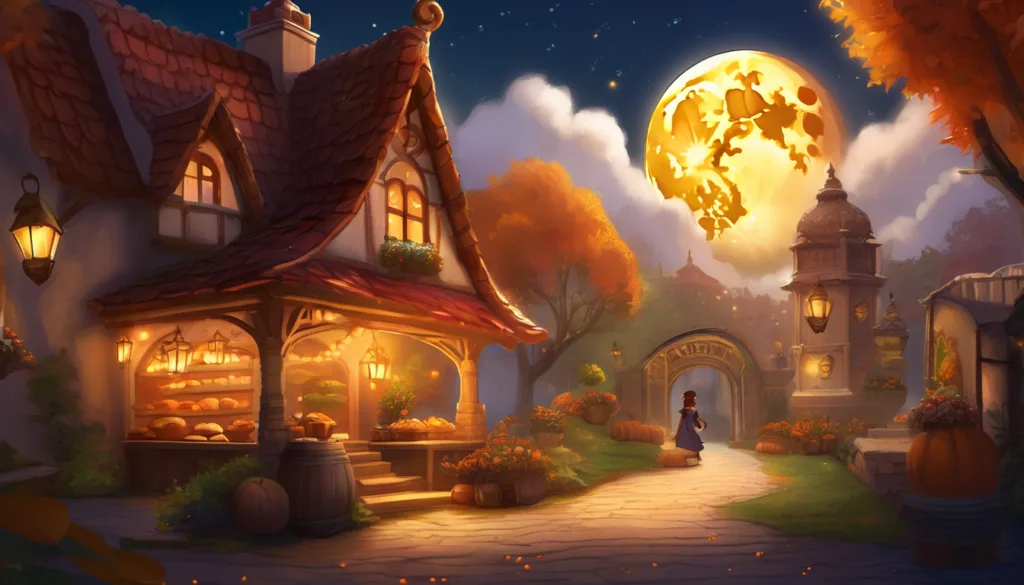
It was a small town called Meren, nestled beside the river where it curved around a green hill.
There were no towering walls. No guards at gates. No secret valley hidden behind cliffs.
There was simply a town.
Children played marbles in the square. An old woman swept leaves from a doorstep. A baker handed out warm rolls to anyone who looked hungry. Two people were mending a broken fence together. Near the river, a group of children were placing stones around the roots of a young willow tree so the soil would not wash away.
Professor Bellini parked the car beside the market.
“Why are we here?” Sami asked.
“I once heard something interesting about Meren,” said the professor. “But I wanted to see it for myself.”
They walked through the town.
At the schoolyard, every child had a little patch of garden. At the library, there were shelves of books and shelves of seeds. At the town hall, a large painted sign read:
WHAT WE CARE FOR, WE KEEP.
Sami read it aloud.
Then an older boy came running across the square.
“Grandmother!” he called. “The rain barrel is overflowing again!”
A woman with gray braids set down her basket of apples.
“Then we had better share the water with the community garden,” she said.
Soon, several people came with buckets. Nobody had been told they had to help. They simply came.
Sami watched them laughing and carrying water through the square.
Then Sami saw a small empty piece of land beside the river. It was sunny, sheltered by a gentle hill, and filled with dark, rich soil.
A wooden bench stood nearby.
“What grows there?” Sami asked a gardener named Kenza.
“Nothing yet,” said Kenza. “We saved it for something important.”
“Why?” asked Sami.
Kenza smiled. “Because good things need room.”
Professor Bellini knelt beside the empty patch. He pressed his fingers into the soil.
“It is deep,” he said. “It drains well. The river is close, but not too close. The hill will block the fiercest wind.”
Then he looked at Sami.
“But is this the safest place in the world?”
Sami looked around.
At the children sharing their gardens.
At the baker giving away rolls.
At the neighbors mending fences.
At the people carrying buckets so a thirsty garden could drink.
Sami thought about Vardun Keep, where the walls were strong but few people could enter. Sami thought about the hidden valley, where the soil was soft but the cliffs could fall.
Then Sami said, “I think the safest place is where lots of people care.”
Professor Bellini’s eyes grew shiny.
“Yes,” he said. “That is exactly right.”
The people of Meren gathered around the little empty patch of land.
Professor Bellini opened the wooden box.
For a moment, nobody spoke.
The heartwood seed rested in his palm, dark and golden, quiet as a sleeping beetle.
Sami helped dig a hole. Not too deep. Not too shallow.
Professor Bellini placed the seed inside.
Kenza covered it with soft soil.
A child named Tomas brought water from the rain barrel.
An old man named Haruto placed a little ring of smooth stones around the spot.
And everyone stood together, looking down at the earth.
“What happens now?” whispered Sami.
“Now,” said Professor Bellini, “we wait. We care. We return. We make sure it has what it needs.”
So they did.
Sami visited Meren often.
In the first year, a green shoot appeared.
In the second year, it grew leaves shaped like small hands.
In the third year, it was taller than Sami.
Professor Bellini came too, though he walked with a carved wooden cane now. He sat on the bench beside the young tree and told stories to anyone who wanted to listen.
He told of desert winds and moonlit seas. He told of snow leopards and singing sand. But his favorite story was always the final expedition.
“The world’s safest place,” he would say, “is not always where danger cannot reach. Sometimes it is where people reach for one another.”
Years later, the heartwood tree grew broad and magnificent.
Its roots held the riverbank steady during heavy rains. Its branches made a cool green roof over the town square. Birds built nests in its high limbs. Children read books beneath it. Travelers rested in its shade.
And every spring, when new leaves unfolded like tiny green hands, Sami would sit beneath the heartwood tree and remember the golden envelope, the robin’s egg motorcar, and Professor Bellini’s bright eyes.
Above, the leaves rustled softly.
They sounded almost like a thousand gentle voices saying:
Here is safe.
Here is cared for.
Here is home.
Leave a Reply